Great Clinical Decisions Don't Always Lead to Great Patient Outcomes
You made the right decision. You explained the plan clearly.
The patient nodded. It was all very polite. Then … nothing changed.
Most healthcare professionals are taught to evaluate the condition. Few are taught to evaluate the interaction.
The HEArT Framework is clinical reasoning applied to interactions. It gives clinicians five stages for evaluating the interaction when good clinical decisions are not becoming meaningful patient action.
Rather than assuming the problem is understanding, motivation, or resistance, HEArT helps clinicians locate where friction may be occurring and decide what needs attention next.
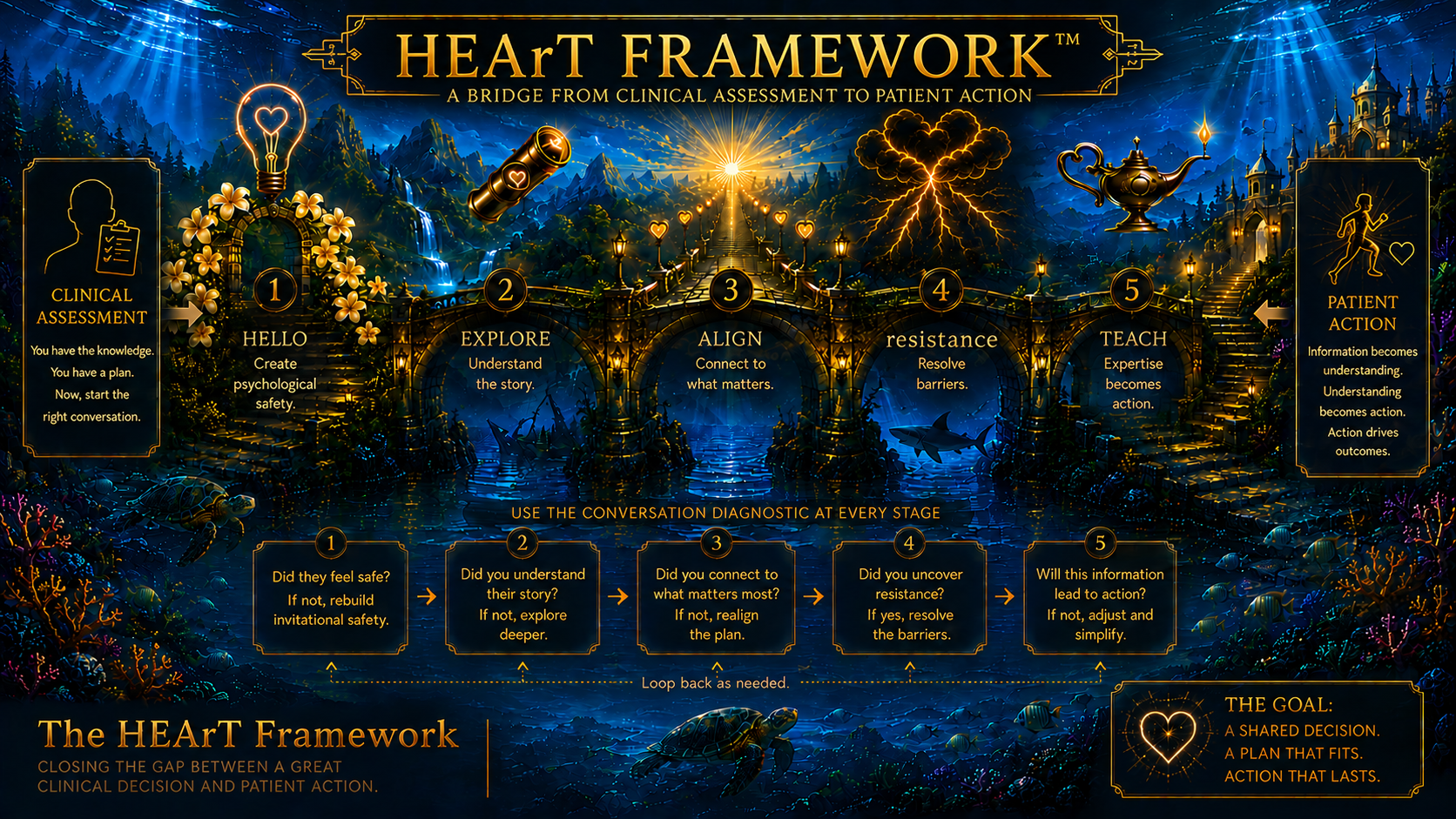
Check out each stage:
-
![Create Psychological Safety]()
Hello: Create Psychological Safety
-
![Understand the Story]()
Explore: Understand the Story
-
![Connect to What Matters]()
Align: Shared Decision-Making and Patient Buy-In
-
![Resolve Barriers]()
resistance: Patient Resistance and Difficult Healthcare Conversations
-
![Expertise Becomes Action]()
Teach: Patient Education and Teach-Back





Under Pressure: Why People Resist — and How to Help Anyway
Share contact information and get notified when course materials are available.
It’s in the works, I promise!
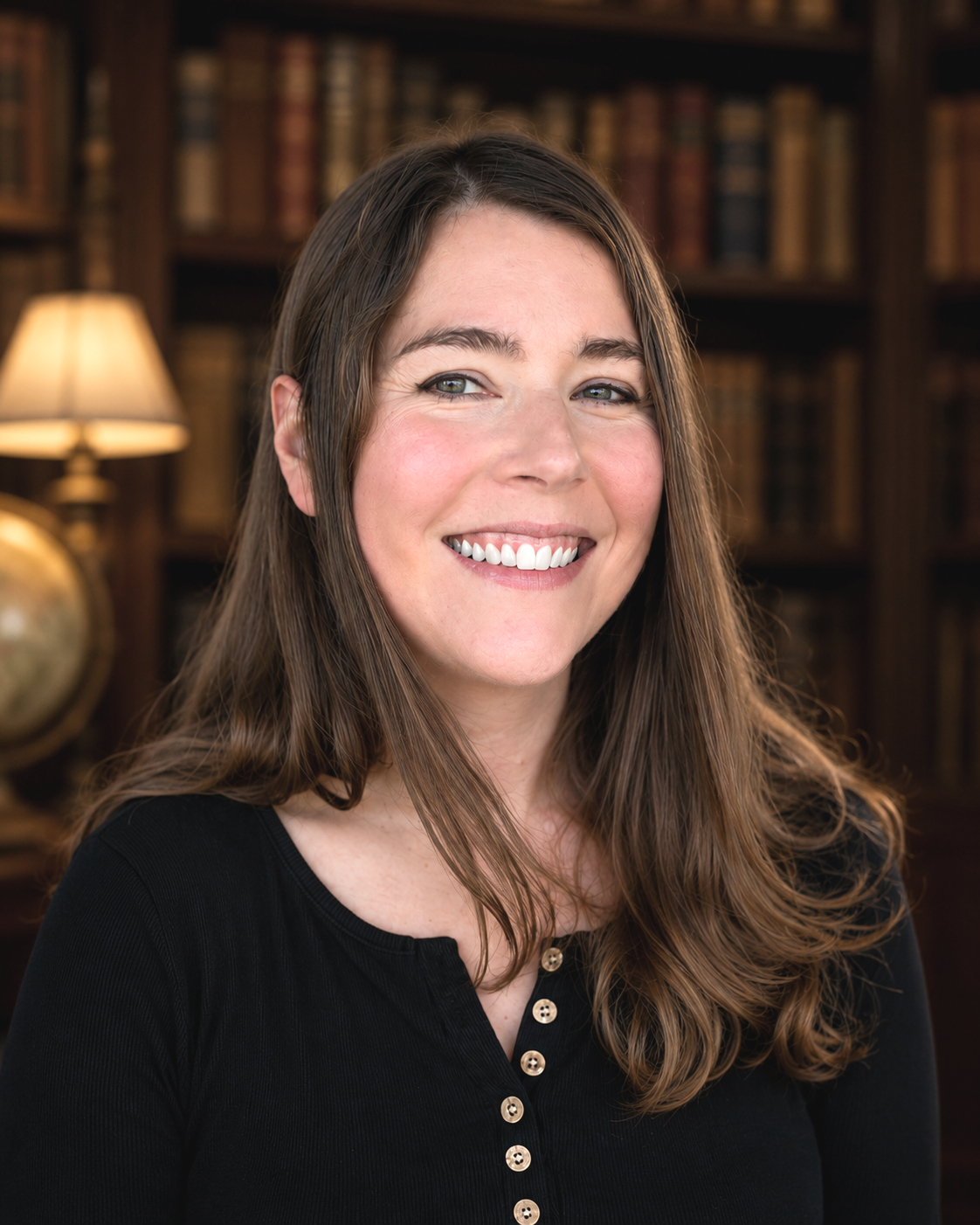
My name is Haley.
I'm an upper extremity specialist on a mission to improve what happens after the clinical decision is made.
For more than a decade, I’ve worked alongside orthopedic and hand surgeons helping people recover from complex upper extremity injuries. Every patient arrived with more than a diagnosis. They brought a story. Workplace accidents, traumatic amputations, devastating injuries, unexpected setbacks, fear, uncertainty, and the challenge of rebuilding a life even though it changed in an instant.
Those experiences taught me the hardest part of healthcare isn't always making the right clinical decision. It's helping another human being understand it, trust it, and act on it.
As the clinical expert and project manager for Naked Prosthetics—now part of Össur—I worked with clinicians, engineers, and patients around the world to evaluate candidacy for one of the leading partial-hand prosthetic systems. Every interaction carried significant consequences. Success depended on more than technical knowledge; it required listening carefully, uncovering what mattered most to each person, and helping teams make confident decisions under pressure.
Over time, I realized I wasn't just evaluating injuries—I was diagnosing the interaction. When a discussion blew up, when a person pushed back, or when a team struggled to reach alignment, there was usually a reason beneath the surface. Learning to recognize and navigate those moments became just as important as clinical expertise itself.
Today, I’m on a mission to help clinicians build trust, navigate resistance, and improve patient outcomes. Through writing, speaking, continuing education, and digital learning, my mission is to equip healthcare professionals with practical skills that transform what happens after the clinical decision is made…because that's where outcomes are won or lost.